Civilization
Why America Must Arm the Iranian Resistance
America has done all it can against Iran externally, and hit a dead end – so it’s time to arm the Iranian resistance.

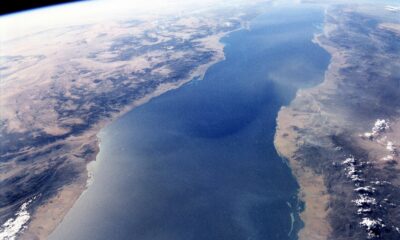
The United States has embarked on an unprecedented campaign of maritime and financial isolation against the Islamic Republic of Iran. Following the escalation of hostilities in early 2026, Washington deployed a formidable dual-pronged offensive.
Two separate external attacks on the Iranian regime
First, the enforcement of a comprehensive naval blockade by Central Command, initiated in April, effectively sealed the Iranian coastline and crippled traditional maritime exports. Second, the launch of Operation Economic Outcast in August established a draconian financial quarantine, systematically targeting the digital assets, front companies, and shadow banking networks that historically served as Tehran’s economic life support. By any conventional metric, these measures represent a masterclass in tactical coercion. The immediate financial devastation inflicted upon the regime numbers in the billions of dollars, and the physical interdiction of the shadow fleet has squeezed Iranian oil revenues to historic lows. However, tactical victories do not automatically translate into strategic triumphs. Despite the massive economic hemorrhage, the current strategy is fundamentally unlikely to achieve the ultimate objective of ensuring Iran never obtains a nuclear weapon, so long as the ruling theocracy remains in power.
America is no longer the financial ruler of the world
The era of unilateral American financial hegemony, where exclusion from the dollar system guaranteed national insolvency, is actively being dismantled by a coalition of revisionist powers. Iran does not stand alone in its resistance; it is deeply embedded within a supportive matrix comprising China, Russia, and to a lesser extent, North Korea. This axis, increasingly recognized as a unified front against Western influence, has actively intervened to neutralize the most devastating effects of the American blockade. Consequently, the maximum pressure campaign is producing an unintended acceleration of Iran’s complete integration into a Sino-Russian bloc, transforming what was intended to be an imminent economic collapse into a protracted, heavily subsidized geopolitical stalemate.
China remains the cornerstone of Iranian economic survival. Beijing continues to absorb the vast majority of Iran’s heavily discounted crude through independent “teapot” refiners that operate at the margins of the dollar system. That oil trade is only part of a broader sanctions-evasion toolkit: yuan settlement through China’s Cross-Border Interbank Payment System (CIPS), cryptocurrency transfers in the United States Dollar Tether (USDT) stablecoin and bitcoin, shadow-fleet shipping, and—where useful—newer wholesale rails such as the China-centered Multiple Central Bank Digital Currency Bridge (mBridge) platform. mBridge—whose participants include China, Hong Kong, Thailand, the UAE, and Saudi Arabia—is one piece of a larger effort to settle outside dollar messaging.
Iranian adaptability – with Russian and Chinese help
The result is liquidity without collapse. These messy, overlapping channels keep the state apparatus functioning even as Operation Economic Outcast and the naval blockade squeeze conventional finance. They do not make Treasury sanctions irrelevant. They do make a clean financial kill shot far harder than the administration’s rhetoric implies.
While China provides the financial shield, the Russian Federation supplies the logistical and military backbone necessary to weather the storm. Moscow has vehemently condemned the American naval blockade, framing it as an act of economic warfare, and has moved aggressively to ensure Iranian survival. The bilateral relationship has deepened into a comprehensive strategic partnership, characterized by the exchange of advanced military technologies, air defense systems, and intelligence sharing. Furthermore, trade between the two nations is conducted entirely in national currencies, intentionally circumventing Western financial choke points. Russia recognizes that the collapse of the Iranian regime would remove a critical node of resistance against American hegemony in the Middle East, and is therefore deeply committed to subsidizing Tehran’s defiance.
The physical counterpart is a growing overland and Caspian logistics system the Navy cannot board. Russia and Iran have turned the Caspian into a wartime supply line—wheat, feed, industrial goods, and military components moving between Russian ports such as Olya and Iranian Caspian terminals—precisely because the Gulf is under blockade. The International North-South Transport Corridor (INSTC) has also gained traffic, including its eastern rail branch through Kazakhstan and Turkmenistan. Central Asian governments have every commercial reason to keep those lines open.
The U.S. Navy can’t be everywhere
The result is food and parts the Navy cannot seize. That is not an unrestricted substitute for seaborne oil. INSTC capacity is still limited. The western rail link through Azerbaijan remains constrained by the incomplete Rasht–Astara section inside Iran. Insurance, customs friction, and the risk of further strikes on Iranian rail and ports all cap what these routes can carry. There is no public evidence of a perfected, large-scale energy-swap machine that pipes Russian oil and gas into northern Iran in volumes sufficient to free equivalent southern barrels for illicit export. What evidence does show is more modest and still dangerous to U.S. strategy: enough bilateral trade to prevent a sudden logistical collapse, and enough Russian-Iranian traffic on an inland sea that American maritime power cannot interdict. Sanctions and the blockade hurt. They do not isolate Tehran from its two most important patrons.
Iran won’t bend
Chinese offtake and parallel payments, plus Russian Caspian and corridor logistics, make near-term Iranian capitulation under economic pressure alone unlikely. The administration’s reliance on economic strangulation is yielding diminishing returns against a state that prioritizes ideological survival over economic prosperity and possesses the institutional experience to operate under extreme isolation. The theocracy has consistently demonstrated a willingness to shift the burden of sanctions onto its citizenry, violently suppressing the inevitable domestic unrest while insulating the Islamic Revolutionary Guard Corps and the nuclear establishment from the worst of the deprivations. Waiting for the regime to simply run out of money is no longer a viable strategy when Beijing still buys the oil and Moscow still runs the inland pipeline of food and parts.
This strategic stalemate is occurring against the backdrop of a rapidly ticking political clock in Washington. The United States faces a significant probability of a substantial shift in congressional power in early 2027. Such a transition will inevitably bring intense domestic political scrutiny, budgetary constraints, and a potential recalibration of foreign policy priorities. The window of opportunity for the current administration to achieve a permanent resolution to the Iranian threat is closing. If the executive branch merely maintains the current holding pattern of sanctions and blockades, it risks passing an unresolved and highly volatile crisis to the next Congress, squandering the momentum generated by the initial shock of the April naval maneuvers and the August financial offensive.
A new strategy
The ultimate endstate must remain the absolute prevention of a nuclear-armed Iran. The February strikes degraded the nuclear infrastructure, but they did not erase the scientific knowledge or the ideological drive of the clerical establishment to achieve weaponization. A theocratic regime backed into a corner, perpetually squeezed by sanctions but kept alive by hostile foreign powers, has every incentive to dash toward a nuclear breakout as the ultimate guarantor of its survival. If the current strategy fails to force capitulation, and the blockade merely serves as an irritant rather than a fatal blow, the United States is essentially allowing the regime the time and space to rebuild its nuclear program within the protective shadow of the Sino-Russian umbrella.
To break this deadlock and achieve the stated objective, the United States must commit to a far more decisive and aggressive course of action. If the regime cannot be starved from the outside, it must be dismantled from the inside. The most viable pathway to permanently neutralizing the nuclear threat is the removal of the theocratic regime itself. Achieving this without the commitment of massive conventional American ground forces requires leveraging the greatest vulnerability of the Iranian state: its own deeply dissatisfied and increasingly desperate civilian population. The economic hardships exacerbated by the blockade, while survivable for the regime elites, have pushed the broader populace to the breaking point.
Arming the Iranian resistance
Washington must pivot toward a robust, covert strategy of training, arming, and equipping an Iranian insurgency. This is not a call for indiscriminate violence, but rather a highly coordinated, intelligence-driven campaign to empower the secular, indigenous resistance elements already existing within the population. The United States has extensive historical experience in unconventional warfare and the sponsorship of resistance movements. By establishing covert supply lines, potentially exploiting the very same porous borders and overland routes currently utilized by the regime for trade, the American intelligence apparatus can deliver the kinetic capabilities and secure communication technologies necessary to transform unorganized protests into a potent, organized revolutionary force.
An armed insurgency, actively supported by American resources, would force the internal security apparatus to fight a multi-front war within its own borders. By targeting the domestic enforcement mechanisms, the logistical nodes of the nuclear program, and the command-and-control infrastructure of the state, a well-equipped resistance can systematically hollow out the regime’s capacity to govern. This internal pressure, combined with the external weight of the ongoing maritime blockade, creates a compound crisis that neither Beijing nor Moscow can easily mitigate through financial bailouts or rail deliveries. It shifts the burden of defense entirely onto Tehran, exploiting the very real fractures between the ruling clerics and the citizens they oppress.
A critical juncture
The United States stands at a critical juncture in its policy toward the Islamic Republic. The tactical execution of the naval blockade and Operation Economic Outcast is undeniable in its immediate impact, yet these tools alone are insufficient to secure a lasting strategic victory against an adversary actively shielded by the world’s premier revisionist powers. With the looming specter of a congressional power shift in early 2027, the time for half-measures and passive economic warfare has passed. To guarantee that Iran never obtains a nuclear weapon, the United States must abandon the illusion that sanctions alone will force capitulation. It is time to take the fight directly to the foundation of the theocracy by arming the Iranian people and facilitating their liberation. Only through decisive intervention can Washington secure its vital interests and fundamentally alter the strategic balance of the Middle East.
This article was originally published by RealClearDefense and made available via RealClearWire.
Stephen D Cook is a retired U.S. Army Special Forces Lieutenant Colonel with 25 years of service. A combat veteran decorated for both heroism and valor, he is the author of the field manuals Plan Like a Green Beret, and Choose the Heavier Ruck, and the techno-thriller In the Shadows of the Sky. His work explores the intersection of elite military decision-making, intuition, and disruptive leadership. He is based in St. Augustine, Fla.