
Accountability
China’s economy could overtake US economy by 2030, analysts predict

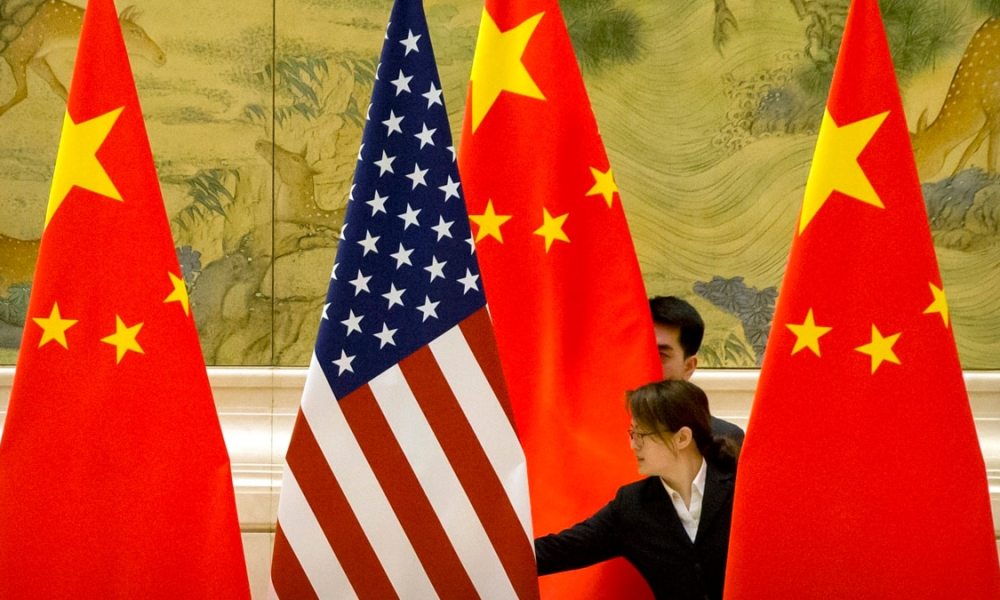
China’s economy will increasingly rely on state investment, high-tech development and domestic consumption, with less input from its past staple of export manufacturing – as it stands to overtake the United States in the coming decade, analysts predict.
China’s GDP should grow 5.7% per year through 2025 and then 4.7% annually until 2030, British consultancy Centre for Economics and Business Research (CEBR) forecasts. Its forecast says that China, now the world’s second-largest economy, would overtake the No. 1-ranked U.S. economy by 2030. Credit insurance firm Euler Hermes made a similar forecast.
Chinese leaders have pushed over the past decade to rely more on value-added services over traditional factory exports, state media have said. The Sino-U.S. trade dispute and early 2020 workplace closures due to COVID-19 have added pressure on manufacturing.
Domestic spending has driven most of China’s economic growth before 2021 as the country reduced its exposure to the world in view of the Sino-U.S. trade dispute, McKinsey & Co. says in its China consumer report 2021. Supply chains have “matured and localized, and its innovation capabilities were enhanced” in turn, McKinsey & Co says.
That trend is likely to continue despite hits to income under lockdowns during the first year of COVID-19, analysts say. China’s population exceeds that of the United States by 3.5 times, though American consumers are wealthier on average.
“In the past five years, domestic consumption has … become a more significant growth driver as China’s domestic consumer market has grown dramatically in size,” said Rajiv Biswas, Asia-Pacific chief economist with IHS Markit.
Beijing’s leadership “aims to create more than 11 million new urban jobs and expand domestic demand and effective investment,” the official Xinhua News Agency said in mid-2021. Those measures, it said, “are expected to put the economy firmly back to pre-pandemic vibrancy.”
London-based consultancy firm Capital Economics (CE) also argues that China’s workforce has declined and will continue to do so by more than 0.5% by 2030, Newsweek reports.
“The most likely scenario is that slowing productivity growth and a shrinking workforce prevent China ever passing the U.S.,” the analysis said. CE also noted that inflation and the exchange rate will play a significant factor in deciding how the economic standoff plays out. Some experts have argued that it would require a near disaster from the US economy for this to happen. The U.S. GDP fell 2.3% in 2020


Terry A. Hurlbut has been a student of politics, philosophy, and science for more than 35 years. He is a graduate of Yale College and has served as a physician-level laboratory administrator in a 250-bed community hospital. He also is a serious student of the Bible, is conversant in its two primary original languages, and has followed the creation-science movement closely since 1993.