
Civilization
Ten Propositions: The US, Iran, and the Republican Party
Peter Berkowitz offers ten reasons for the apparent confusion of messaging from the Trump administration toward Iran.


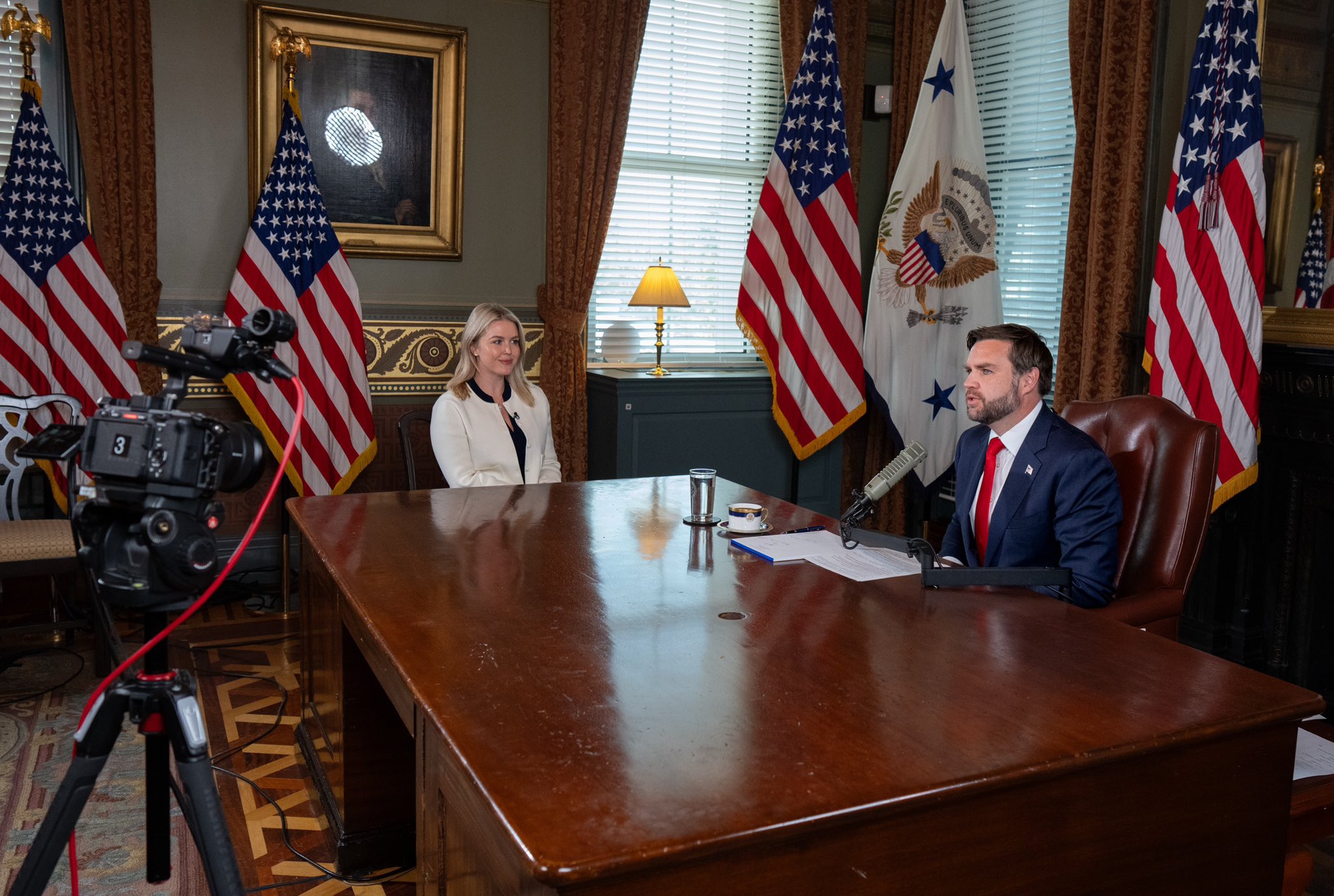
On Sunday, June 21, in Switzerland, Vice President JD Vance exuded optimism, stating that the negotiations he was opening with the Islamic Republic of Iran could “transform the Middle East.” After the first day, he proclaimed a breakthrough: Tehran had agreed to permit International Atomic Energy Association inspections.
The next day, Iran denied it.
Iran has always been at war with Israel, and its Sunni neighbors
Tehran’s long and well-documented history of perfidy is not the only reason to doubt that the Vance-led negotiations will end well. The Islamic Revolutionary Guard Corps (IRGC), which now effectively governs Iran, has given no indication of abandoning its defining ambition – to wage war by whatever means necessary against Israel, Sunni Arab monarchs, America, and the West in order to impose Islamist rule over the Middle East.
Nevertheless, President Trump, like the vice president, has expressed great expectations for negotiations with Tehran.
On Wednesday morning, June 17, while attending the G7 Summit in France and two days ahead of schedule, Trump signed the “Islamabad Memorandum of Understanding between the United States of America and the Islamic Republic of Iran.” The 14-point MOU announced “the immediate and permanent termination of military operations on all fronts, including in Lebanon.” At a press conference later that day, the president anticipated bigger and better diplomatic accomplishments. “[I]t’s my hope that the peace agreement will be the beginning of a much larger deal all across the Middle East,” he said. “We’re very close; look at the job we’ve done on Gaza, look at Hamas, Hamas has been very silent. You haven’t read anything about Hamas.”
Reasons to doubt
The president’s praise of his Gaza deal undercut the grand hopes he professed for his Iran deal. Iran-backed Hamas may have been relatively quiet and out of the headlines since signing on Oct. 9, 2025, the “Comprehensive Plan to End the Gaza Conflict,” a multilateral framework brokered by the Trump administration. However, the jihadists have been far from inactive. Those who haven’t read anything over the last eight months about Hamas’ malign conduct haven’t tried hard to keep themselves informed. The terrorist organization has refused to disarm, consolidated control over Gaza Palestinians, and thwarted the Trump administration’s Board of Peace’s mission, which is to transform Gaza into “a deradicalized terror-free zone that does not pose a threat to its neighbors.”
The Iran MOU sparked sharp criticism, especially among Senate Republicans. Arkansas Sen. Tom Cotton, chairman of the Senate Intelligence Committee, said, “I do have concerns that certain aspects of this deal are stepping in the wrong direction.” Sen. Roger Wicker, chairman of the Senate Armed Services Committee, attacked the stupendous sum the deal earmarked for Iran: “The $300 billion fund for the reconstruction and economic development of Iran – though not funded by U.S. taxpayers – would make Iran’s payoff under President Obama’s 2015 deal look like a pittance by comparison.” And Sen. Ted Cruz, chairman of the Senate Committee on Commerce, Science, and Technology, ratcheted up the rhetoric:
History demonstrates that giving billions of dollars to theocratic lunatics who want to murder us is an exceptionally bad idea, and I think unfortunately the president is receiving some really bad advice on this deal.
What Iran does get, and when
In a June 18 statement to the press at the White House, Vice President Vance fired back. He asserted that the Iranians “don’t get anything unless they change their behavior.” He charged that that the contention that “the Iranians get all of these benefits before the deal is actually consummated” is nothing more than “a talking point that is issued by people who want the conflict to continue indefinitely.” And he insisted that “the simple fact is that the only way the Iranians get any of those resources – not a single penny, by the way, from the United States of America under any circumstances – but the only way that they would ever get any benefit of the bargain is if they comply fully and change their behavior.”
The MOU contradicts Vance.
Of course Iran does not obtain all benefits before the deal is consummated, but Tehran receives up front considerable benefits from formally agreeing to negotiate. Paragraph 4 states,
Immediately upon the signing of this MOU, the United States of America will begin the removal of its naval blockade, and any disturbances or impediments against the Islamic Republic of Iran, and will fully end the naval blockade within 30 days.
And Paragraph 10 provides,
immediately upon the signing of this MOU and until the termination of sanctions, U.S. Department of Treasury will issue waivers for the export of Iranian crude oil, petroleum products, and derivatives, and all associated services, including banking transactions, insurances, transportation, etc.
In other words, the MOU restores Iran’s ability to generate billions of dollars per month by exporting fossil fuels before Tehran has agreed to concrete concessions or significant steps.
Ten propositions – the first three
With the Vance-led negotiations foundering from the get-go and Republicans at loggerheads about the Iran deal, I offer ten propositions to illuminate the perplexing juncture at which U.S. diplomacy stands.
First, the Trump administration entered office split on questions of foreign policy. Republicans like Marco Rubio and Mike Waltz subscribed to the peace-through-strength view of national security, while restrainers led by JD Vance wished to reduce America’s responsibility for maintaining world order. The peace-through-strength tendency prevailed in the decisions to send an armada to the Persian Gulf in January in response to Iran’s slaughter of tens of thousands of its citizens and to launch military operations jointly with Israel in late February. With the June 17 MOU, the restrainers won the debate over ending military operations.
Second, Operation Epic Fury should be understood as the most recent round in a 47-year war that the Islamic Republic of Iran has been waging against America, the West, Israel, and Sunni Arab states.
Third, on March 2, shortly after unleashing Operation Epic Fury, President Trump stated the nation’s military objectives: destroy Iran’s missile capabilities, prevent Iran from acquiring nuclear weapons, and end its arming, funding, and directing of terrorist armies around the region.
The next three
Fourth, although regime change was not Operation Epic Fury’s goal, Trump muddled matters by initially indicating in early January that America would deploy forces to protect the Iranian people from the regime, and then on Feb. 28, with the launch of the military campaign, told the Iranian people in a video that the bombardment would create conditions that would enable them to remove their oppressors and “take over your government.”
Fifth, in the war’s first six weeks the United States and Israel racked up major accomplishments. The two militaries disabled Iran’s air defenses, killed its leadership, substantially degraded Iran’s nuclear program and ballistic missile capabilities, sank much of its navy, and imposed massive economic costs by preventing its oil tankers from exiting the Strait of Hormuz. In addition, the United States imposed on Iran extensive and hard-hitting economic sanctions.
Sixth, with Iran on the ropes, the United States mishandled a two-week ceasefire that went into effect on April 8. Vance-led negotiations in Islamabad ended quickly with a defiant Iran flatly rejecting U.S. terms. Instead of resuming military strikes, completing the destruction of Iran’s ability to project power abroad, and bringing Iran’s economy to its knees, the Trump administration rewarded Tehran’s intransigence and broadcast American indecisiveness by suspending indefinitely the bombing campaign.
Three more
Seventh, the Trump administration did not prepare adequately for Operation Epic Fury. It did little to inform the public about the Iran challenge during its first 13 months in office. It did not adopt measures to forestall Iran’s foreseeable closing of the Strait of Hormuz. And it did not explain to the public that its assurances that the United States would win the war in four to six weeks presented a best-case scenario.
Eighth, Trump administration failures enlarged the fractures within the right concerning America’s role in the world. The bitterness on both sides portends a protracted intra-party struggle.
Ninth, the Iran deal is likely to follow the same downward trajectory as the Gaza deal. The Trump administration’s securing the release last October of the Israeli hostages – 20 living and 27 dead (the remains of the 28th were recovered three months later) – was a milestone achievement even at the cost of Israel’s release of 250 Palestinians serving life sentences and 1,700 other detained Gazans. Since then the Gaza deal has gone nowhere. That’s because progress rested on the unwarranted assumption that Hamas would peacefully disarm. Similarly, the Iran deal depends on the unwarranted assumption that the IRGC will abandon its reason for being, which is to forcibly impose the ayatollahs’ authoritarian interpretation of Islam on the Middle East.
And last
Tenth, Trump’s Iran deal, driven, he acknowledged, by short-term goals – stabilize global markets and reduce American gasoline prices – compromises U.S. long-term interests in a more peaceful and stable Middle East. It does this not least by leaving the Strait of Hormuz’s fate to negotiations between Iran and Oman.
The Middle East – vital to the international economy and therefore to American prosperity – will not escape debilitating conflict and insecurity as long as the IRGC governs Iran and develops nuclear weapons, produces ballistic missiles, and funds terrorist armies.
Only by firmly grounding the nation’s diplomacy and use of military power in knowledge of our adversaries and ourselves can the United States show restraint and employ strength in proper measure as circumstances require. Only by prudently coordinating restraint and strength can the United States secure a more peaceful and stable Middle East that advances American interests and those of our friends and partners in the region.
This article was originally published by RealClearPolitics and made available via RealClearWire.

Peter Berkowitz is the Tad and Dianne Taube senior fellow at the Hoover Institution, Stanford University. From 2019 to 2021, he served as director of the Policy Planning Staff at the U.S. State Department.







-

 Executive5 days ago
Waste of the Day: No ICE Plan For Budget Boost
-

 Executive4 days ago
People’s Republic of Boulder Wants To Run Your Energy Policy
-

 Accountability4 days ago
The New Face of an Old Hatred
-

 Executive3 days ago
The AI Race Is Becoming a Race for Power
-

 Civilization3 days ago
Change is Gonna Come … Soon