
Executive
People’s Republic of Boulder Wants To Run Your Energy Policy
A review of the case of Suncor versus Boulder, now headed to SCOTUS on questions of Federal pre-emption and standing.


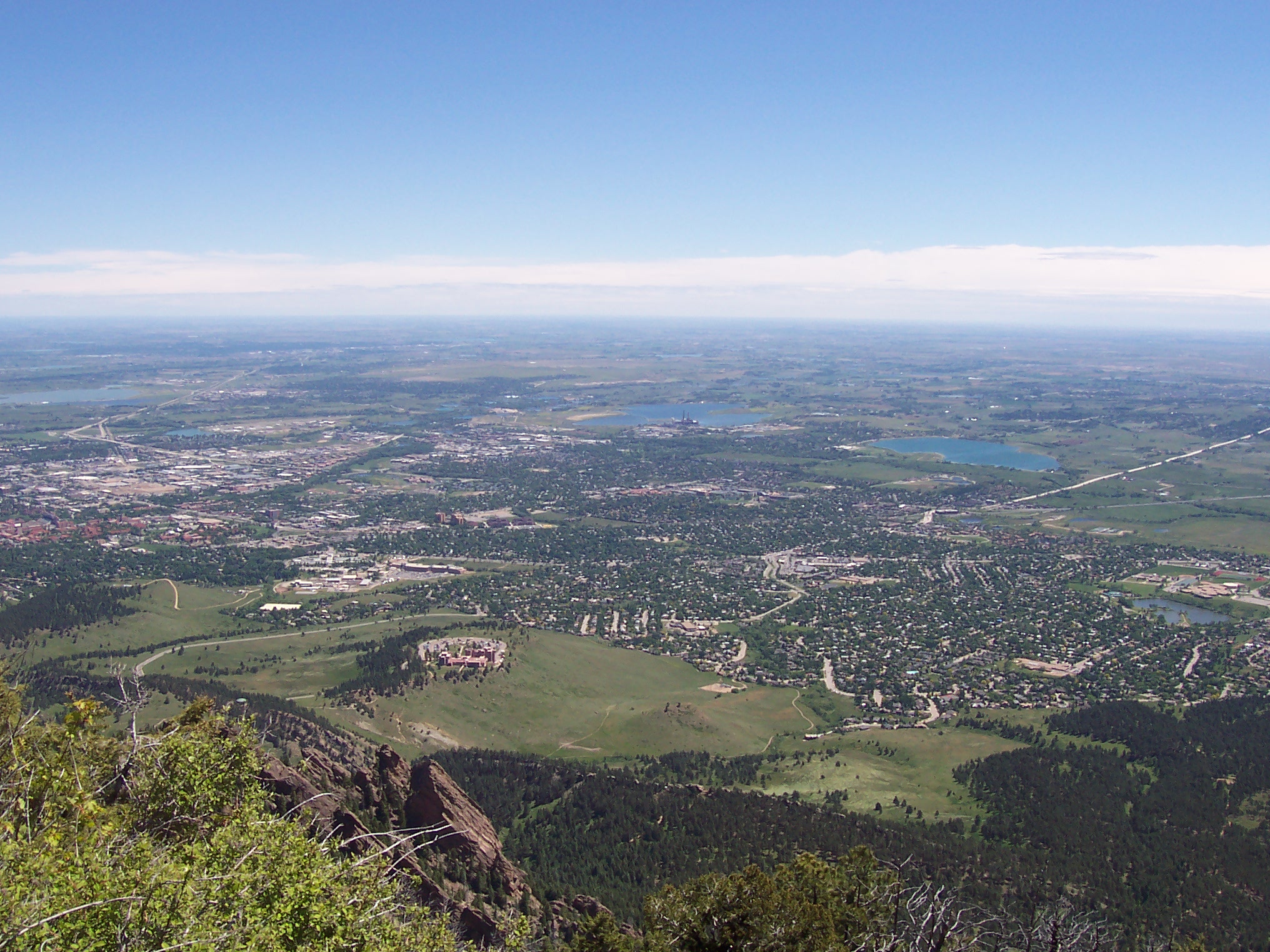
Boulder, Colorado, has spent decades wearing a nickname most towns would take as an insult: “The People’s Republic of Boulder.” It’s a college town of roughly 100,000 people, where the politics climb about as high as … the elevation. But now Boulder wants to export its “Rocky Mountain High,” and it’s headed to the Supreme Court.
Suncor v. Boulder
At stake before SCOTUS is whether that town gets to set energy policy for the rest of America. That’s the real question in Suncor Energy Inc. v. County Commissioners of Boulder County, no matter how carefully supporters dress it up.
In 2018, the City of Boulder, Boulder County, and San Miguel County sued in Colorado state court arguing energy companies’ products fueled climate change and that the companies should cover whatever local costs these opportunistic politicians wanted.
Translation: Sell a legal product to willing customers around the world, and a county in Colorado can bill you for the weather.
Boulder insists it isn’t trying to regulate anyone’s emissions. One of its own lawyers forgot the script. David Bookbinder, who helped file the case for Boulder told a Federalist Society panel that tort liability is “an indirect carbon tax” and the lawsuit is “somewhat of a convoluted way to achieve the goals of a carbon tax.”
Congress has refused to pass a carbon tax for decades because voters won’t stand for one. So the activists went shopping for a courtroom instead.
This is how the green movement operates when it can’t win an honest vote. Pick one friendly jurisdiction, score a win where nobody’s watching, then export the result to everyone else.
Copying California
California perfected the method. Its rule to end sales of new gas-powered cars by 2035 was never put before the people of Ohio or Virginia. Yet the Clean Air Act let other states copy it, and 11 states plus Washington, D.C., signed on. Unelected regulators in Sacramento were writing the car-buying rules for a huge share of the country.
Boulder is running the same play, with a jury box in place of an air board. A win wouldn’t stay in the Rockies. Roughly three dozen similar lawsuits are already waiting around the country, and every one of them would get a green light.
One law professor put it plainly: “If Boulder can attach liability to these two companies … it can attach liability to thousands of others.” That isn’t a lawsuit. It’s a regulatory regime run by whichever county files first.
Emissions don’t stop at county lines. They come from every state and every nation on earth, and Beijing won’t be cutting Boulder a check anytime soon. The Constitution has an answer for problems that cross state lines and national borders: Washington, not a county courthouse.
Thankfully, the Trump Justice Department filed a brief backing the companies, as did Alabama and more than two dozen other states. Lined up behind Boulder? Colorado and 18 Democrat-led states. That tells you whose agenda this really is.
Who outside of Boulder voted for those people or their policies?
Oil companies, like every other company, don’t eat judgments. They pass them along. Every dollar a Colorado jury awards becomes a cost baked into what you pay to fill the tank, heat the house, and ship the groceries. Then they will feign crocodile tears over “affordability.”
The trucker in Missouri and the farmer in Kansas never got a vote for Boulder County commissioner. Under this theory, they’d still get the invoice.
But as the case comes up for a hearing, there’s a twist. Justice Samuel Alito recused himself last week, leaving eight justices to decide the case. An evenly split Court would leave the Colorado Supreme Court’s ruling in place, and Boulder’s lawsuit would roll on.
That makes this argument even more important. The justices need to see this case for what it is: national energy policy, drafted in one of the most liberal zip codes in America and aimed at everyone else.
America became an energy superpower because producers, workers, and voters built it, not because a county commission found a sympathetic judge. If the left wants a carbon tax, it should make that case to Congress and the American people, out in the open.
Boulder is free to govern Boulder. The rest of us never voted to join the People’s Republic.
This article was originally published by RealClearPolitics and made available via RealClearWire.

Larry Behrens is the Communications Director for Power The Future. He has appeared on Fox News, OANN and NewsMax speaking in defense of American energy workers. He is the author of the book “Sabotage: How Joe Biden Surrendered American Energy Independence.”






-
 Constitution5 days ago
Green Energy Mandates Meet the Commerce Clause
-

 Civilization4 days ago
AI (or Super Intelligence) Day at the White House
-

 Executive5 days ago
Waste of the Day: Federal Dumpster Diving
-

 Civilization3 days ago
In CA Gov. Debate Becerra Runs Against Trump More Than Hilton
-

 Civilization4 days ago
Why Vague AI Regulation Threatens Our Strategic Edge Against China
-

 Civilization3 days ago
California Turns Down Bipartisan Funding for VA Cemetery
-

 Executive2 days ago
Waste of the Day: Storm $ Bought Lamborghini
-
Civilization2 days ago
China’s Functional Strategy: The Fusion of Technology and Global Penetration