Civilization
Why Is Putin Removing Border Markers?
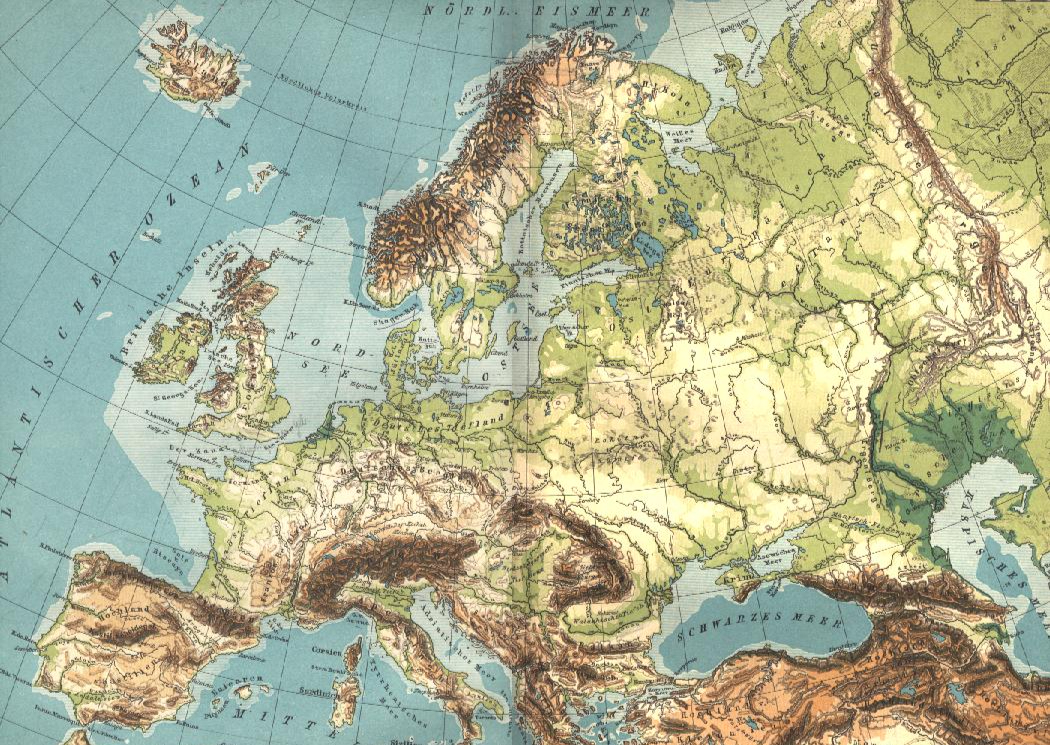
The European Union has denounced Russia’s removal of buoys marking the Russian border with NATO country Estonia on the Narva River. A total of 24 out of 50 buoys placed to mark sailing routes were removed in the early hours, Estonian officials said. A plan to change the maritime borders with Finland and Lithuania was also on a Russian military website before it was taken down.
A (relatively) short history of Russia moving borders
European authorities were not surprised. Redrawing maps and international borders is something Russia has been doing for decades.
In 1992 Russia forcibly invaded the eastern part of Moldova and created the Russian enclave of Transnistria- a state without internationally recognised borders.
In 2015 South Ossetian troops and their Russian allies had worked through the night, sinking new border-marking poles across fields outside a hamlet called Tamarasheni in the hills of central Georgia. The Russians granted the local farmers 72 hours for an emergency harvest then ordered them to leave—forever. “They took 10 hectares [about 25 acres ] this time,” said farmer Levan Kipshidze, tallying the latest chunk of Georgia swallowed up by Russia.
After Russia seized the Ukrainian peninsula of Crimea in 2014 Putin declared it a “sovereign and independent state”. However, after a sham referendum, Putin then stated it was a part of Russia and has been pictured as such on Russian maps. This set the template for the annexation of Donetsk, Kherson, Luhansk and Zaporizhzhia oblasts of Ukraine and their geographical inclusion into the state of Russia.
In May 2023, Putin displayed a 400-year-old map that he claims to show that Ukraine isn’t a real country, not noticing it has ‘”Ukraine or land of the Cossaks” written on it.
In March 2024, Former Russian President, Dmitry Medvedev presented a map showing most of Eastern Ukraine belonging to Russia. Also, Medvedev’s map shows changed borders of other countries, including Poland and Romania.
Legitimacy for immediate expansion
Putin clearly seeks legitimacy for his violent invasions of nearby states. He recently talked about creating a ”buffer zone” in Ukraine. Just another disputed area on a map.
What about the upcoming Swiss Peace conference?
The Ukraine Peace Conference, planned for June 15-16, is to take place in Bürgenstock Switzerland. The conference plans to bring together representatives from up to 80 countries. Ukraine has put forward its 10-point peace plan to counter an earlier 2022 proposal put forward by Russia. In the Russian proposal Luhansk, Donetsk and Crimea were to remain in Russian control and the Ukrainian army was to be size-limited. The two plans are widely divergent.
Putin was at first angry about the Swiss plan, mainly because Russia has not been invited. However, the long-time opportunist now sees a chance to spread misinformation – false information which is deliberately intended to deceive. So out of nowhere, anonymous Russian officials declare that Russia is amenable to peace talks.
What are Putin’s goals?
Firstly, it is challenge to Ukraine’s greatest supporter, American President Joe Biden, who cannot be seen to evade the prospect of ending this unpopular war. Ukrainian President Zelensky says Biden must attend, but the U.S. is more likely to send an emissary like Secretary of State Antony Blinken.
Secondly, Russia wants to world to recognize the borders based on the current battlefield lines. Russia wants the Central Asian states, particularly Uzbekistan, and China to back his demands.
China has much more opaque interests, such as keeping Russia a vassal state, dependent on its exports and military equipment. It is unlikely to attend, other than as an observer. China’s 12-point peace plan is conspicuously commerce oriented.
Finally, Russia will agree to consider the outcome. It will delay the process for months – at least until it gets new administrations elected in friendly Western countries. Russia has sponsored far-right political parties in France and Italy, and Hungary continues to rally against the Ukrainian peace plan. Of course Russia would like a new administration elected in the United States.
Putin does not want a documented peace deal with clear border markings. He wants grey zones, which can be disputed, and through which Russia can continue its aggressive land grabs.
Editor’s Note
The views expressed herein are, as ever, the author’s own and do not necessarily represent those of CNAV. Much of what the author presents here are matters of fact subject to independent verification. However, much else is a matter of opinion, and might not reflect documentable Russian history going back centuries, not decades. In any event, no court of competent jurisdiction exists to judge the author’s truth claims, or Vladimir Putin’s truth claims. Arguably no such court has ever existed. The era of the Liberal Rule-based World Order is over, and these complaints might reflect frustration with that situation. But CNAV would recommend accepting the situation gracefully, rather than continuing a fight that is not ours.
This article was originally published by RealClearDefense and made available via RealClearWire.

Patrick Drennan is a journalist based in New Zealand, with a degree in American history and economics.