Civilization
The Hormuz Blockade Is Not About Iran — It’s About China
The American Naval blockade of the Strait of Hormuz is not an attack on Iran (that would be redundant), but on China.

Much has been written about the U.S. naval blockade of Iranian ports in the Strait of Hormuz. The majority of commentary has been critical. But let us set aside emotion, political sympathy, and ideology — and examine the facts with a cold, strategic eye. Because what we are witnessing is not simply a military confrontation with Iran. We are watching the opening moves of a new Great Game in the Middle East — and its primary target is Beijing.
First, a Critical Distinction – blockading not Hormuz but certain vessels
There is widespread confusion about what the United States has actually done. Washington has not blockaded the Strait of Hormuz. The U.S. is blockading vessels entering or departing Iranian ports. Ships from the UAE, Saudi Arabia, Qatar, and other nations pass freely. This is Iran’s blockade — not the world’s. That distinction matters enormously, both legally and strategically.
This doctrine did not emerge overnight. It was embedded in Trump’s National Security Strategy and reflects a deliberate assertion of American control over the arteries of global commerce wherever they matter most.
The Numbers Tell the Story
The economic mathematics are devastating for Tehran. The blockade costs Iran approximately $276 million per day in lost exports and roughly $150 million in disrupted imports — a combined daily loss of approximately $426 million, or nearly $13 billion per month. Iran’s oil storage reserves can absorb only 13 days of accumulated production before wells must be shut down. And shutting down oil wells is not a temporary inconvenience: restarting frozen infrastructure requires foreign currency reserves that Iran simply does not possess.
Even if Iran attempts overland workarounds, those routes carry at most 10% of its total oil export capacity. The critics who dismiss the blockade on the grounds that 70% of Iran’s borders are land borders are missing the point entirely: oil does not move efficiently over mountains and hostile frontiers.
Iran’s Escape Routes Are Already Closed
Let us walk the map. Iran shares borders with Iraq (where U.S. forces are stationed), Turkey (a NATO ally that cannot risk U.S. retaliation and has already absorbed Iranian ballistic missile strikes, intercepted by American forces — while NATO’s Article 5 was conspicuously silent), Azerbaijan (an Israeli and American partner with longstanding tensions toward Tehran), and Armenia.
Armenia had historically maintained close ties with Iran and served as one of Tehran’s key transit corridors — allowing Iranian goods and energy to reach Georgia’s Black Sea ports via Armenian territory. That route is now effectively closed. Armenia has shifted firmly into the Western orbit following the Trump-brokered Azerbaijan–Armenia peace agreement and the so-called “Trump Corridor” (Zangezur), which has redrawn the logistical map of the South Caucasus.
The Georgia Republic
Georgia itself — whose ports Iran relied upon for Black Sea access — has been subjected to sustained and escalating American pressure. Since Trump’s return to the White House, Washington closed several American-funded foundations operating in Georgia, suspended government assistance programs, and withdrew its ambassador. For nearly a year, no new U.S. ambassador has been appointed — a signal in diplomatic language that carries unmistakable weight. U.S. military Hercules transport aircraft landed at Tbilisi International Airport. Secretary of State Marco Rubio personally called Georgia’s Prime Minister. Days before that call, a senior State Department official visited Georgia and inspected the construction potential of the strategically vital Anaklia Port on the Black Sea. The visit was followed by Azerbaijani President Aliyev’s trip to Tbilisi, where he met directly with Georgia’s de facto ruler Bidzina Ivanishvili. All of this occurred before the naval blockade of Iran was declared. The sequencing was not coincidental.
Further north, Turkmenistan — a potential corridor to Central Asia — has seen a quiet but significant U.S. military presence emerge, with six Hercules-type transport aircraft and elite American units reportedly deployed there in January and February 2026. Afghanistan and Pakistan complete the encirclement: pre-war border clashes between the two countries and Washington’s financial leverage over a debt-strapped Islamabad — whose Gulf creditors suddenly demanded early loan repayment — have sealed those corridors as well.
Russia can’t help
To the north lies the Caspian Sea, where Iran’s two major ports offer a theoretical Russian lifeline. That option was closed as well: Israel destroyed one of those ports in an airstrike — and notably, Russian, and Chinese vessels were also damaged. Both Moscow and Beijing absorbed that loss in silence. The message was received.
Russia itself is no longer in a position to rescue Tehran. Since Trump’s inauguration, Ukraine has destroyed approximately 50% of Russia’s oil export infrastructure. Combined with reinforced sanctions and the elimination of U.S. banking exemptions for Russian institutions, Moscow is fighting for its own economic survival.
This Is the Real Target of the Hormuz Action: China
The Iran war cannot be understood in isolation. It is one front in a broader campaign that began the moment Trump returned to the White House on January 20, 2025. The pattern is unmistakable: the trade war against China (which Washington won), the eviction of Chinese influence from Canada, Mexico, Panama, and Greenland, the realignment of Asian and Central Asian nations away from Beijing’s orbit, the seizure of Maduro’s Venezuela and its oil redirected to American markets, the flipping of Colombia, and the deployment of U.S. military forces to Nigeria — ostensibly to protect the country’s persecuted Christian population — which brought Africa’s largest oil producer firmly into the American strategic sphere. Add to this the ongoing strangulation of Cuba, and a coherent global picture emerges.
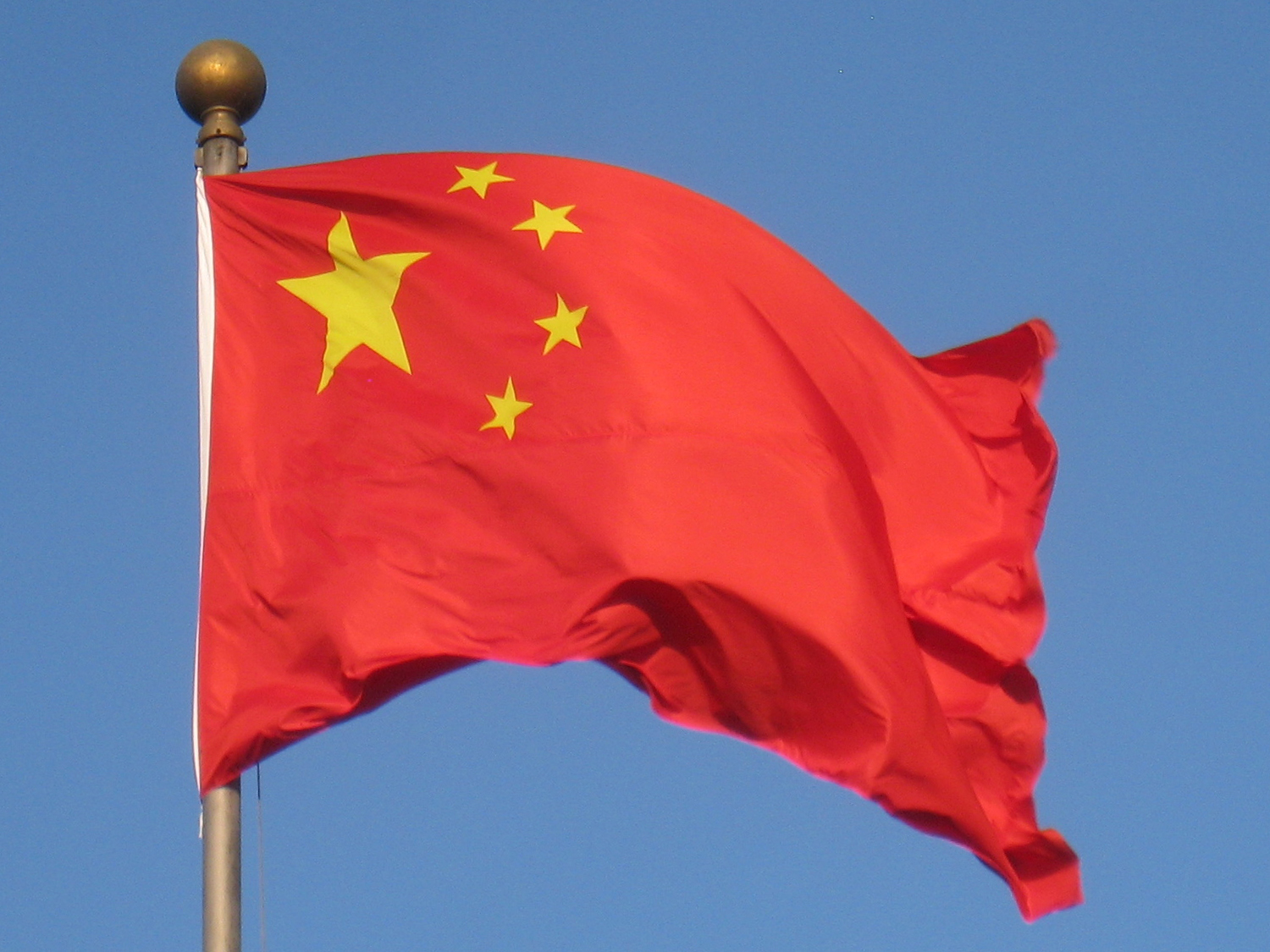
Now comes the Middle East. Before Operation Epic Fury, China received 5.35 million barrels per day through the Strait of Hormuz. That figure has now collapsed to approximately 1.22 million. China is already experiencing fuel shortages, with queues forming at gas stations and strategic reserves declining daily. China bought 95% of all Iranian crude exports. The Hormuz blockade, in effect, is an energy embargo on Beijing executed through Tehran.
Malacca: The Next Chokepoint
Twenty years ago, then-Chinese President Hu Jintao warned of the “Malacca Dilemma” — China’s existential vulnerability to any power capable of closing the Strait of Malacca between Indonesia, Malaysia, and Singapore, through which the bulk of China’s energy imports must pass. That warning has never been more relevant.
Washington has now announced a new defense cooperation agreement with Indonesia focused specifically on the Strait of Malacca. The Hormuz precedent has shown that American willingness to act is not theoretical. Beijing’s strategists are now contemplating a world in which Hormuz, Malacca, the Lombok Strait, the Makassar Strait, and the Mindoro Strait — every critical artery feeding China’s economy — could be subject to the same instrument of pressure.
Trump’s Strategic Logic
When Trump declared that Iran “has no more cards to play,” he was not boasting. He was sending a precise diplomatic signal: the negotiating leverage Tehran thought it possessed — oil disruption, proxy threats, nuclear ambiguity — has been systematically stripped away over the preceding twelve months. The blockade is not the beginning of a strategy. It is its final chapter.
The preparation was meticulous. Consider the sequence: the containment of Iran’s proxies, the destruction of its air defenses in the 2025 Twelve-Day War, the assassination of its supreme leader, the targeting of its banking system which can no longer pay its own fighters, the sealing of every land corridor, the neutralization of its Caspian port, and the financial exhaustion of its would-be rescuers. Trump, a devoted follower of UFC, understands the discipline: prepare thoroughly, land the knockout blows, then close the choke.
America Is Now the World’s Gas Station
The strategic dividend is already visible. Hundreds of supertankers from across the globe are now redirecting to American ports to purchase U.S. crude. Venezuela’s oil flows to American refineries. Nigerian and Colombian reserves are aligned with Washington. The United States is not merely defending its allies in the Middle East — it is positioning itself as the indispensable energy superpower of the 21st century.
For China, this is not a temporary disruption. It is a structural realignment. Every barrel that no longer flows from Iran to Beijing is a barrel that must be sourced from suppliers operating within the American strategic orbit, at prices and terms Washington can influence.
Conclusion: the Hormuz blockade is working
Critics of the Hormuz blockade are debating the wrong war. The question is not whether it is legally tidy or diplomatically convenient. The question is whether it is achieving its strategic objectives. The evidence suggests it is.
Iran’s terrorist regime is being economically strangled. Its regional network has been dismantled. Its nuclear program has been set back by years. Its supreme leader is dead. Its banking system cannot meet payroll. Its overland escape routes are sealed. And the power that sustained it — China — is watching its own energy security erode in real time.
This is not chaos. This is strategy.
My recommendation: stock up on popcorn. The most consequential geopolitical realignment of the 21st century is unfolding before our eyes. And if recent history is any guide, Washington is winning.
This article was originally published by RealClearDefense and made available via RealClearWire.
Emzari Gelashvili is a former Member of the Georgian Parliament (7th convocation) and a former senior official across Georgia’s Special Services, including the Ministry of Defense, the Ministry of State Security, and the Ministry of Internal Affairs. He is an independent security and intelligence analyst based in California and publishes regular geopolitical insights on Substack.