
Executive
How To Run a Government
The successors to Elon Musk and his Department of Government Efficiency (DOGE) share their plans for the path forward.

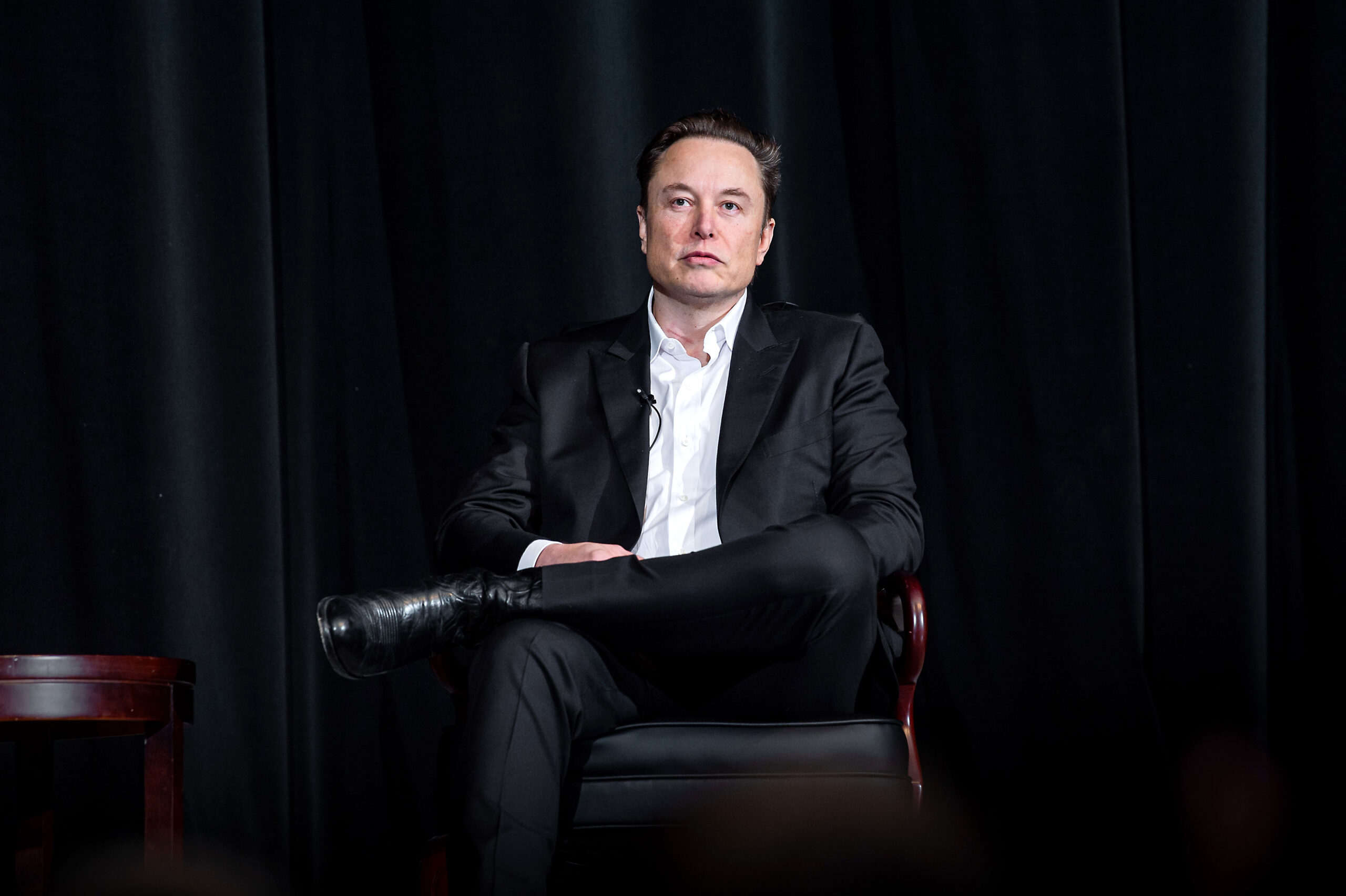
The much-maligned Department of Government Efficiency (DOGE) officially shut down on July 4, marking the end of a turbulent year for the federal workforce. The Elon Musk brainchild was always supposed to be in place only until the semi-quincentennial, according to the executive order that remade the U.S. Digital Service into a federal hound dog to sniff out waste, fraud, and abuse.
Wither DOGE now?
So what now?
Office of Personnel Management Director Scott Kupor watched DOGE’s investigations and cuts for almost a year. He was a quieter figure in the background as Musk & Co. loudly disparaged career civil servants as political hacks who were attempting to thwart President Donald Trump’s agenda. But the Silicon Valley venture capitalist came to Washington with plenty of ideas on how to shake up the government’s chief human resources agency. Kupor detailed his plans in an interview with RCP from his corner office in the Theodore Roosevelt Federal Building in Washington.
OPM is an interesting dynamic. We have purview over all the civilian employees at the same time. So, a lot of this is storytelling, power of persuasion, convincing people why what we’re telling them to do is a good thing. There’s a lot of positive cajoling to try and convince people why what we’re getting to do is important for them, and that’s been a fun part of the job.
He told RealClearPolitics that he believes strongly in the method of saying the same thing over again “until you’re blue in the face,” which he’s done not only with his new TikTok account but also with his weekly blog titled “Secrets of OPM.”
In one of his first installments, Kupor formally canceled DOGE’s directive for every federal employee to email them five things they accomplished in the week, an instruction which struck federal employees as demeaning. It also sparked national security concerns, particularly for federal employees with security clearances. In others, he corrected media stories about deferred resignation programs, showed the inside of an obsolete yet still-functioning federal paper mill, and promoted the agency’s “Make Government Cool Again” idea to supercharge Gen Z hiring.
A nonpolitical workforce? Really?
Kupor’s job is right in the uncomfortable nexus as the political appointee between the White House and what should be a largely nonpolitical workforce. In recent years, the government has averaged 2.2 million civil service positions, fewer than 5,000 of which are politically appointed. OPM is the independent agency that manages human resources policy, hiring, retirement, personnel policies, and healthcare benefits. Kupor said he wants to devote his tenure to making the work culture more productive and efficient.
What we’re really trying to do here is to show people that we’ve got to be good stewards of taxpayer dollars. We’re very good, in D.C., of expanding the layers of the cake. Now we’ve got to actually go down to those layers that have been buried for a long time and just ask the question: do they really matter anymore, and do they really add value?
DOGE used a chainsaw to answer that question. The agency claims to have saved $215 billion in taxpayer money (down from Musk’s original promise during the 2024 campaign of $2 trillion), as of the last website update on Jan. 1. Of the 272,000 workforce reductions, 14,000 were voluntary departures through a deferred resignation program, Kupor said. DOGE outright fired roughly 6,000 probationary employees, early career workers who had not worked in government long enough to receive the same career protections.
Now, he wants to stock the government with younger workers and reduce barriers with private corporations to make short-term hiring easier. He also wants to keep up the fraud hunting effort, so Kupor is partnering with Vice President JD Vance’s anti-fraud task force.
This is a very big ship that’s going in one direction, and you can look at the work that Elon and others did as trying to do a hard left turn to change the nature of how things were for a long time. The general MO around here was basically budgets only go one direction, which is budgets only go up every year… So I do think there was value in that. What we’re trying to do now is it’s got to be an ongoing, sustained effort, right? You can’t just reduce headcount one time and then expect culture to change.
The Silicon Valley approach to running a government
The culture Kupor says he wants to instill in the federal workforce is more akin to the ethos of Silicon Valley, where he spent nearly two decades with the venture capital firm Andreessen Horowitz. He wants to make the most use of existing budget, trim extraneous programs, and make the workforce more willing to be creative and take risks.
But that approach worries some lawmakers. Silicon Valley is also known for the “move fast and break things” approach, which investors agree to when they back a particular venture. American taxpayers don’t have that option. During a March oversight hearing with the House Appropriations Committee, Democratic lawmakers urged Kupor to make his reforms carefully and to start by undoing the damage to workforce morale that DOGE wrought.
Rep. Steny Hoyer (D-Md.) says the government must offer more competitive pay.
The tradeoff [for a government job], of course, was stability and less pay. What we’ve done is we’ve undermined, very substantially, stability. So if you’re a young person looking to come into service, you look at an employer that is sending a very negative message – not you, but the CFO of our country – regarding federal employees.
He was referring to comments last year from Office of Management and Budget director Russ Vought, who said he wanted
the bureaucrats to be traumatically affected … we want them to not want to go to work because they’re increasingly viewed as the villains.
Kupor dodged responding to Vought’s comments during the hearing, saying simply that he wanted to modernize systems and bring on younger workers on a short-term basis.
Nevertheless, in our interview, Kupor suggested that the current federal workforce culture is too rigid and careful. He downplayed the ethical risks of making it easier for private companies to send their young talent to work in government, saying the benefits of ruffling some dusty bureaucratic feathers are worth it.
I was at a venture firm for almost 17 years. We all get lazy, we all get set in our ways when we’ve been somewhere for a long time. The value of [a public-private partnership] is just having people who have some different experience.
Make Government Cool Again
To make this possible, Kupor is reenergizing the agency’s “Make Government Cool Again” initiative (a moniker that started under President Barack Obama) to make it easier for young people to apply to government careers. He launched the U.S. Tech Force to partner with leading technology companies to hire 1,000 engineers and specialists to work on artificial intelligence infrastructure. Kupor also has the idea to create partnerships that allow private-sector companies to loan out their employees for a brief government stint. Around 97% of the top tier of civil servants, called the Senior Executive Service, have spent their entire careers in the federal workforce. Kupor said the individual people were great workers, but it’s not part of a culture he wants to see moving forward.
I think we would achieve better outcomes for the American taxpayer if we had a little bit more diversity of experience … Again, nothing wrong with that experience, just that it’s the same experience. If you had some other experience … people might manage differently, might think about things differently, they might have more creativity.
Surveys indicate most of the federal workforce is on edge with recent overhauls and job uncertainty. The Partnership for Public Service launched its own employee satisfaction survey for federal employees last year after OPM canceled its annual Federal Employee Viewpoint Survey. Across just over 11,000 respondents, only around 32% said they were satisfied with their jobs. A dismal 10% said they trusted political leaders. At OPM alone, 75.5% of respondents said they are less engaged at work compared to the previous year. Across the entire government, only 7.5% said their political leaders generate high levels of motivation or maintain high standards of integrity.
New classifications for government employees
“I don’t know of a single private sector organization that has a number anywhere remotely that bad that is still in business,” Partnership for Public Service CEO Max Stier told RCP. He lauded efforts to hire younger people but pointed out that DOGE firing probationary employees did not indicate to incoming employees that the public sector would be welcoming for them.
At the start of the year, Kupor avoided much of the political criticism because the overhauls that happened under DOGE predated him. Now, the heat is intensifying as he oversees sweeping adjustments to the nation’s HR department.
In June, Trump signed an executive order to reclassify around 8,000 federal employees under Schedule Policy/Career. In the Oval Office, Domestic Policy Council special assistant James Sherk characterized the order as a way to better promote or discipline people in policymaking roles, cutting red tape that he claimed made it difficult to fire someone for serious misconduct. It also strips several job protections from them and makes more federal employees subject to politicized management decisions.
Said Stier:
The OPM director is often supposed to, in some sense, demonstrate some independence because they should be looking out for the system, for the institution. Scott has not, I think, recognized some of the vital differences between the private sector and what needs to happen in the public sector. The most important one is this question of the need for some protection of the nonpartisan civil service to ensure that they can really do their jobs in a way that does not get infected by partisanship and the specific personal interests of the leaders of the day.
The Nondisclosure Agreement Rule
Kupor has also been taking heat for a new rule that would require every federal employee to sign a nondisclosure agreement, regardless of their role. Responding to backlash from Democrats, Kupor insisted that the rule change would not affect whistleblower protections. But it’s another private sector-like model that he says would promote trust within the federal workforce (and maybe fewer leaks to the media).
We can’t have an intelligent conversation if every time we have a meeting, I know that one of you is just going to go talk to somebody. I’ll stop inviting you guys to meetings, and then we just have, I think, a really poor process, because then I can just sit here, at my desk and make decisions without the benefit of other stuff.
Kupor argued that the NDA would mirror Freedom of Information Act rules, which ensure that whistleblowers who leak information in the public interest to expose corruption cannot be fired. He also said it would apply to pre-decisional information, and after a decision is made public, any employee may say what they wish. But the rule language is not limited to pre-decisional information. And Kupor admitted that there is not currently a greater scourge of leaks to the media than in previous years.
If we actually set the expectation, the incentive, which is, you should not leak to the media in these pre-decisional cases, I certainly hope that would help. If it turned out people were leaking inappropriately and violating the NDA, and there were some adverse employment action that came out of that, I think it could have a positive impact, personally. The goal is not to fire people, the goal is to create an environment where we can make sure that we have conversations that people can handle with the appropriate level of confidentiality, so that we don’t interfere with the decision-making process.
Combined with the Schedule Policy/Career changes, Stier said OPM has been doing more to traumatize the federal workforce than to revitalize it.
In an environment where almost eight out of 10 of your employees don’t think that they can speak truth to power about a violation of law, why in the world would you make it even worse by adding a non-disclosure agreement that you claim doesn’t change the law, but all it’s going to do is make people even scared?
Kupor walked a delicate line between insisting on change and not villainizing his employees to the same degree that DOGE did.
The vast, vast majority of these people understand [that] our job is to serve the public. But there’s no question that there are people who let their political views get in the way of their ability to do their work in a senior policy-making role. I just don’t think you can run an organization that way.
This article was originally published by RealClearPolitics and made available via RealClearWire.
Carolina Lumetta is White House correspondent for RealClearPolitics.