Civilization
The Two Thanksgivings Between Halloween and Christmas
Veterans Day is, properly speaking, an earlier thanksgiving, for sacrifices made after the United States became a country.


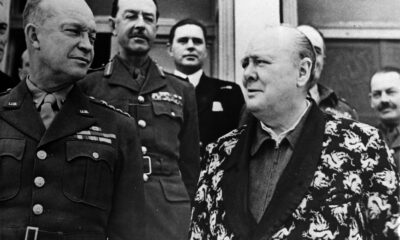
In the United States, November 11th has been known as Veterans Day since 1954 (before that, it was known as Armistice Day). Originally, Veterans Day commemorated the Allies’ victory in World War I. However, after the Second World War, veterans of that conflict including Dwight Eisenhower pushed to expand the holiday to honor all veterans. In many ways, this holiday is about giving thanks to those who have served in wars to protect the United States of America. In that sense it is as much a day of thanksgiving, if not more so, than the one at the end of the November.
History of the first Thanksgiving
The Thanksgiving we all know and love, which we celebrate with turkey, mashed potatoes, cornbread dressing/stuffing, cranberry sauce, and a multitude of pies, began as a solemn day of prayer and remembrance. Churches and political bodies often declared a day of thanksgiving after major events. These “holidays” could take place any time of the year. So why November?
President George Washington issued the first national day of thanksgiving on November 26th, 1789 as a day for prayer and giving thanks to God “for his kind care and protection of the People of this Country previous to their becoming a Nation.” But Washington’s declaration was not the start of an annual holiday.
President Abraham Lincoln, from the prompting of writer Sarah Josepha Hale, officially set a national holiday on the final Thursday of November in 1863. Established during the Civil War, the new holiday encouraged Americans to remember and give thanks for blessings and military successes of the United States of America. Lincoln and Hale both thought a holiday could help heal the divided nation.
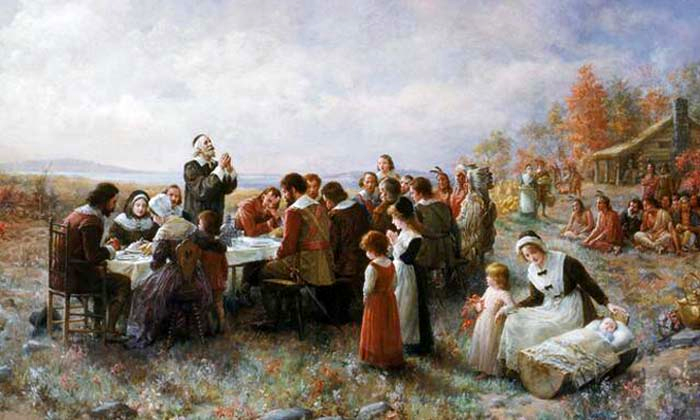
By the 20th century, Thanksgiving morphed into the feast we know today. The modern holiday is loosely based on the “First Thanksgiving” that the Pilgrims of Plymouth Colony had in 1621, which was a harvest feast and a solemn day.
Two holidays in a month
The rise of American consumerism during the late 19th century led to the growth of holiday meals and celebrations. During Franklin D. Roosevelt’s presidency, the holiday was moved to the third Thursday of November, which allowed for a few extra days of Christmas shopping to help boost an economy that had been limping along during the Great Depression. One could say that the holiday creep started with FDR.
As both Veterans Day and Thanksgiving are sandwiched between Halloween and Christmas, these November holidays have unfortunately been relegated to a secondary status.
Despite the origins of both these days of thanksgiving, we often forget the history and get swept up in the hustle and bustle of the holiday season. There is nothing wrong with putting up your Christmas tree early, but hopefully you and your family can pause and celebrate the two days of thanksgiving this November.
This article was originally published by RealClearHistory and made available via RealClearWire.

Timothy C. Hemmis is Associate Professor of History with a specialization in Early American History at Texas A&M University - Central Texas in Killeen, Texas. His research focuses on empire, national identity, war and society in Revolutionary America (1750-1815). He earned his Ph.D. from the University of Southern Mississippi in 2015. He is a fellow with the Jack Miller Center.