Civilization
No Way Out for Xi
President Xi Jinping of the People’s Republic of China cannot survive if he does not at least try to invade Taiwan.


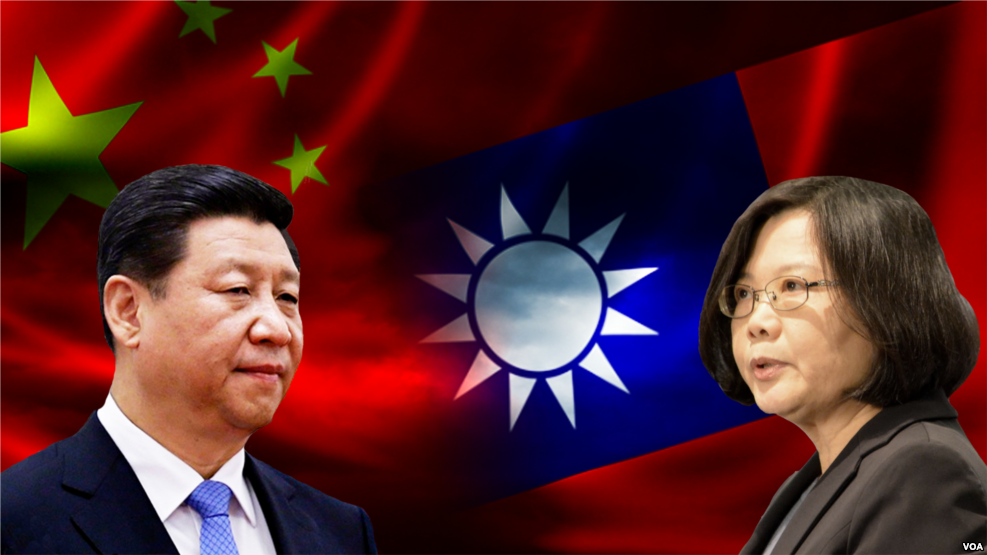
A Counteressay to Captain Marc Liebman’s “Waterfall of Five Reasons Why the PRC Will Not Invade Taiwan”
Prefatory Note
Marc Liebman is an accomplished Naval Aviator, combat veteran, and a strategic thinker whose essay deserves the honest engagement demanded by serious work. My essay is offered in that spirit. I do not dispute Liebman’s central deterrence prescription. In fact, I agree that we must arm Taiwan heavily and do it now. What I do dispute is the essay’s analytical foundation, as elegant as its structure may be. A right answer derived from the wrong reasons is a fragile basis for policy.
Liebman asks: will the People’s Republic of China (PRC) invade Taiwan? This counteressay asks a different question: Does Xi Jinping think he has a choice? The answer emerging from an examination of Xi’s decision environment is more alarming than Liebman’s reassuring analysis suggests.
What Liebman Gets Right
Before convening the murder board, credit is owed where due. Framing five cascading risks as a deterrence waterfall is a sophisticated and elegant analytical structure. Moreover, Liebman’s treatment of the Taiwan Strait crossing — shallow-water ASW, mine clearance under fire, establishing and sustaining a beachhead across 110 miles of contested open water, fighting uphill through dense urban terrain backed by mountainous interior — reflects a grasp of the operational art that most Western commentary lacks entirely. But gaining the beachhead is the easiest phase. Sustaining and expanding it against a determined, well-armed defender on terrain geographically favorable to defense is where invasions historically collapse. Liebman’s Okinawa comparison is apt and sobering. This assessment is unusually astute and worthy of our highest praise.
The limitation is not that the assumption is wrong, but that it may be irrelevant. A full-scale amphibious assault is neither Xi’s only option, nor within the capability of the People’s Liberation Army (PLA) Navy, nor perhaps his most likely course of action. The foundation therefore does not stand.
Central Flaw — The Rational Actor Assumption
The premise of Liebman’s deterrence architecture is that Xi Jinping and the Chinese Communist Party (CCP) will accurately calculate the costs of invasion and respond rationally. Each of his five cascading risks depends on this assumption. Remove the rational actor assumption and the waterfall no longer flows. It dries up.
The historical record is unambiguous:
- The Great Leap Forward, 1958–1961: Fictional grain surpluses reported by Mao’s subordinates while 15 to 55 million starved.
- Cultural Revolution, 1966–1976: Mao dismantled the CCP’s own military and administrative competence to eliminate internal rivals.
- Korea, 1950: Mao committed forces against a nuclear-armed United States despite warnings of catastrophic PLA disadvantage. Cost: up to 400,000 dead.
- Tiananmen, 1989: Deng deployed tanks in full international view against explicit warnings of economic consequences.
- Vietnam, 1979: Deng invaded with an unready PLA for reasons of political signaling, not military logic.
- Zero COVID, 2020–2023: Catastrophic lockdowns maintained until social pressure forced an abrupt, unexplained reversal.
The historical pattern is unambiguous: the CCP has repeatedly committed to catastrophic courses of action, against foreseen consequences, driven by ideological imperatives and the logic of regime survival. Will Xi receive accurate information about the risks? If so, what will he do about it?
Murder Board — Where Liebman’s Strengths Become Liabilities
The Corruption Argument Inverted
Liebman treats water-filled missile tubes and purged generals as evidence that Xi can see his military’s weakness and be deterred. This assumes the information collapse is visible to the decision-maker. The same culture that allowed subordinates to fill missile tubes with water will not suddenly produce officers with the courage to deliver an accurate readiness assessment. The corruption Liebman characterizes as a deterrent is the corruption most likely to be invisible to Xi. He may order an invasion with genuine confidence in a military capability that exists only in the reports of officers too afraid to say otherwise.
Latent Domestic Unrest is Too Damned Latent
The protest statistics are real. The underlying grievances are real. But latent unrest and actionable unrest are separated by an enormous operational gap that the CCP has spent decades mitigating. Three mechanisms keep it inert:
- Fragmentation by design has eliminated the civil society infrastructure required to convert individual grievance into collective action;
- The nationalism propaganda valve will redirect economic pain toward external targets the moment a Taiwan conflict begins; and
- The most comprehensive and effective surveillance architecture in human history detects organized dissent before it achieves operational scale.
The White Paper protests, the most significant challenge to Xi in a decade, were suppressed within weeks. Latent unrest may be a generational structural vulnerability, but as a near-term invasion deterrent, it is effectively inoperative.
‘Asian Face’ — A Generalization That Obscures More Than It Reveals
Liebman invokes ‘face’ as if it were a unified pan-Asian cultural phenomenon. It is not. The Confucian-influenced Chinese communist concepts of social currency, reputation before others, moral integrity, and community trust are meaningfully distinct from Japanese, Korean, or Vietnamese versions. Treating them as interchangeable reduces our ability to predict CCP institutional behavior.
The Confucian cultural dimension is complex. The CCP relationship with Confucius is selective: Confucianism was violently rejected during the Cultural Revolution as feudal counter-revolutionary ideology but has been rehabilitated by Xi as a source of cultural legitimacy. However, the rehabilitation is not fully sincere. Critically, the Confucian tradition contains a counter-current that the CCP finds particularly dangerous. The Confucian “Mandate of Heaven” holds that a ruler who governs badly must be overthrown. CCP censorship of Mencius, the most explicit and consequential interpreter of this tradition, is not incidental. It provides a tacit acknowledgment that authentic Confucianism poses an existential threat to regime legitimacy.
The Chinese diaspora and the “Lao Bai Xing” (ordinary people) still carry this tradition in lived cultural memory, transmitted through family rather than formal education. This represents a long-term threat the CCP cannot completely extinguish. Even though it is too latent to manifest in a short crisis window, over future decades it is the most dangerous threat to communist ideology in the Chinese political consciousness.
One cannot predict how Xi would define saving or losing face
Liebman’s model predicts that face culture will cause the PLA to avoid engagements it cannot win with certainty. Korea and Vietnam provide historical contradictions. In modern Chinese cultural context, face culture can operate as an accelerant toward exactly the kind of high-risk military commitment his framework says it will prevent. Mao went to Korea to demonstrate that China would fight. Face drove him toward that irrational decision, not away from it.
Xi’s own relationship to these cultural norms is not easily predictable. He himself was shaped by the Cultural Revolution. As the son of a disgraced high ranking communist official, Xi was sent to the countryside as a teenager as part of a movement that publicly humiliated people for embodying traditional cultural norms. Applying ‘face culture’ as a behavioral predictor to a man whose formative experiences were defined by the violent repudiation of that culture is more complicated than Liebman acknowledges. If anything, Chinese communist “face culture” has driven PRC leadership towards irrational decisions, not away from them. In the current Chinese context face can accelerate exactly the kind of high-risk action Liebman’s framework says it will prevent.
The Iranian Parallel — No Theological Off-Ramp for Xi
The Khomeinist mullahs are irrational actors by any conventional definition. A rational actor would have cut a deal long ago. The mullahs have not, because their peculiar brand of Shia eschatology provides a framework in which catastrophic loss is potentially redemptive. They have an ideological off-ramp: tactical accommodation framed in theological terms. Xi has no equivalent. His irrationality, if it manifests, will be driven by something colder: legacy, humiliation, and survival. Xi has even less room than the mullahs to cut a deal. He has painted himself into a corner: The CCP position is that Taiwan is already Chinese sovereign territory. There is no negotiating space within that framework. The choices are either capitulation or fulfillment.
The Single-Scenario Fixation
Liebman’s military analysis addresses a massive amphibious assault — the most logistically demanding option available to Beijing, and arguably the least likely near-term move. Yet Xi and the PRC have a wide spectrum of coercive tools to avoid the catastrophic military risks Liebman so effectively describes. Several of them have already been exercised:
- Naval blockade: A quarantine of Taiwan’s ports could strangle the island’s import-dependent economy — including over 97% of its energy needs — without a beach landing and at much less cost.
- Seizure of outlying islands: If Kinmen or Matsu were seized it would provide a fait accompli to test resolve below the threshold of full military response while establishing a precedent of successful PRC action, a precedent already set in the South China Sea islands and reefs.
- Graduated cyber operations: Systematic attacks on Taiwan’s power grid, financial system, and communications infrastructure would degrade the will to resist without triggering the same alliance responses a military assault would produce.
- Information operations and economic coercion: Exploiting KMT political divisions, weaponizing rare earth export controls, and pressuring third-country partners to choose between China and Taiwan. These aggressive actions are already in progress.
An essay about why the PRC will not invade Taiwan that devotes its military analysis to the option the PRC is least likely to choose first is analyzing the wrong question.
Factors the Essay Does Not Address
Some critical variables are absent from Liebman’s analysis.
First, CCP propaganda does not merely suppress dissent — it constructs an alternative reality in which Taiwan’s return is a sacred national destiny and every hardship is caused by Western aggression. The domestic unrest Liebman predicts would occur inside an effective information environment the state controls almost completely. More dangerously, that propaganda shapes the leadership’s own perception of Taiwanese political reality — amplifying KMT divisions, legislative gridlock, and natural fractures within Taiwanese democracy as evidence that reunification is historically inevitable. Beijing may be operating on a picture of Taiwanese resolve that is dangerously optimistic.
Second, Taiwan is not a unified resistant actor. KMT resistance has repeatedly slowed defense budget increases, arms procurement, and conscription extension. Proposals to extend mandatory military service from four months to one year have faced sustained legislative opposition. The will to resist is not a given. It is a primary target of PRC strategy, and Liebman’s essay does not examine it.
Xi does not know or have, and cannot afford, patience
Third, Western intelligence simultaneously describes Xi as a patient strategist, paranoid authoritarian, Maoist true believer, and a leader structurally isolated from accurate information by his own consolidation of power. These descriptions may all be true, but they yield contradictory predictions.
- Xi’s temporal window is finite. He has promised Taiwan and has no designated successor.
- Xi has eliminated nearly all of the internal checks that might moderate catastrophic decisions by consciously replicating the structural conditions of Mao’s late period.
Henry Kissinger, who knew Xi better than almost any Western figure, described him shortly before his death as both the most impressive world leader he had ever encountered and genuinely dangerous in ways difficult to specify. I agree.
Trigger Architecture — No Way Out for Xi
Consider fifteen discrete triggers that could drive Xi toward a Taiwan decision that Liebman’s rational actor framework would classify as irrational. These are not predictions. They are the conditions under which Xi’s internal calculus could cross a threshold that external deterrence may fail to anticipate.
Legacy and historical destiny
- Terminal window: Xi is 71. Every year of inaction is a year closer to passing an unfulfilled promise to an unnamed successor. The calculus is existential, not strategic.
- The Mao comparison imperative: By the internal CCP ledger of historical greatness, Taiwan is the unfinished business separating Xi from Mao’s stature. A man competing with Mao’s legacy for his place in history may find Taiwan impossible to defer regardless of military or economic risk.
- Century of humiliation closure: Taiwan is the last unhealed wound in the foundational CCP legitimacy narrative. Xi has said explicitly that reunification cannot pass to the next generation. This functions as a psychological imperative, operating independently of strategic calculation.
Regime survival
- Hardening Taiwanese identity: Each election cycle produces a younger generation more firmly Taiwanese. If delay makes Taiwan unrecoverable culturally and politically, inaction becomes more dangerous than action. The window closes from both ends.
- Economic deterioration: Property crisis, youth unemployment above 20%, declining FDI, and demographic contraction are straining the CCP’s prosperity-for-compliance legitimacy bargain. A leader who cannot deliver growth may calculate that nationalist mobilization around Taiwan is the only available alternative. Desperation accelerates “wag the dog” risk appetite.
- Internal rival threats and succession vacuum: Ongoing factional tension beneath surface unanimity, combined with no designated successor, compounds the pressure on Xi. He may calculate that taking Taiwan while he is fully in control is preferable to leaving it to a successor of uncertain loyalty.
Manufactured opportunity
- American distraction: U.S. political dysfunction could be read as a strategic window. The trigger requires only that Xi believes it exists, not that it does exist. Distorted intelligence makes this possibility more likely.
- Alliance fracture perception: Perceived fracture in the U.S.-Japan-Australia-South Korea architecture could lead Xi to conclude that the coalition response would be slower than U.S. policy suggests. Systematic optimism in his intelligence feed makes this misreading more probable.
- The fog of manufactured optimism: Increasingly inexperienced subordinates managing Xi’s perceptions deliver systematically optimistic assessments of PLA readiness and Taiwanese resolve. Xi could order actions with genuine confidence in capabilities that exist primarily in reports from officers too afraid to deliver bad news. Intelligence to please? Saddam, Galtieri, Putin — the pattern is well established and not limited to foreign adversaries.
- The KMT opportunity window: The potential for a KMT-aligned government or legislative majority, which materially degrades Taiwan’s defense readiness, represents the most favorable conditions Beijing could possibly hope for.
Provocation and escalation
- Formal declaration of independence: A Taiwanese president crossing Beijing’s stated red lines compels a response regardless of Xi’s preferred timeline. Politburo and domestic audience management forces his hand.
- American military presence expansion: Potential expansion of permanent U.S. bases or troop deployments on Taiwan would create a use-it-or-lose-it calculation. The success of deterrence, pushed too far too fast, could accelerate the decision it is designed to prevent.
- Accident and escalation: A collision between PLA and Taiwanese or American assets — increasingly likely as Chinese military activity intensifies — creates an escalation dynamic neither side fully controls.
No exit for Xi: the structural trap
- The asymmetry trigger: Xi has constructed a political position from which there is no graceful exit. He cannot offer meaningful compromise because the propagandized domestic audience will not accept it. He cannot defer indefinitely because his window is closing. He cannot negotiate — the CCP’s stated position is that Taiwan is already Chinese sovereign territory. Unlike the mullahs, who have a theological framework for tactical retreat and centuries of Persian diplomatic tradition in tactical accommodation, Xi has no off-ramp. Leaders with no good options sometimes choose catastrophic ones.
What this trigger architecture reveals is a convergence of closing windows, ideological imperatives, information failures, and structural political traps that collectively make the ‘rational’ decision to avoid action harder to reach. Does Xi perceive that internal and external conditions are systematically narrowing the space in which precipitous action remains the only perceived politically survivable choice?
‘Now or Never’ Miscalculation Risk
If ‘face’ culture systematically prevents accurate battlefield assessments from reaching senior commanders, and CCP ideology further filters what the Politburo Standing Committee is willing to hear, Xi may be making a go/no-go decision based on a picture of PLA capability that is substantially manufactured. The Great Leap Forward is the historical proof of concept. The famine that killed tens of millions was invisible to Mao because delivering bad news was institutionally and personally dangerous to the news-bearers. That same culture operates in the PLA and the CCP apparatus today.
Liebman’s central premise is that regime survival deters invasion. The same instinct, filtered through ideological rigidity and systematic information deprivation, could accelerate rather than prevent a catastrophic decision. A leadership that cannot receive bad news, that prizes political loyalty over military competence, and that faces existential questions about its own historical legacy, may convince itself that a bold stroke is the only path to survival — precisely when outside observers can see most clearly that it is not. Mao did this in Korea. Deng did it in Vietnam. Galtieri did it in the Falklands. Hitler did it in Russia, and the Athenians did it versus the Spartans. The conditions for the same error exist in Xi’s China.
Iran can cut a deal, but not Xi
The mullahs can cut a deal. Persian diplomatic tradition has centuries of practice in tactical accommodation that preserves strategic position. Shia theology provides a framework for framing retreat as principled resistance. Xi has none of these. He has constructed a political position from which a graceful exit on Taiwan is structurally impossible.
Liebman asks whether the PRC will invade Taiwan. The more dangerous question is whether Xi perceives a genuine choice. Is Xi being driven toward a decision by the architecture of a trap he has built around himself?
The Elephant in the Room
There is a known unknown that must be addressed: the sitting American president and his upcoming visit to Beijing. Donald Trump thinks in transactions, not alliances. In Trump’s words, Taiwan “took our chip business.” Does he think of Taiwan as an economic grievance, or as a democratic commitment worth defending at strategic cost? A deal structured to give Xi meaningful strategic accommodation in exchange for trade concessions, fentanyl cooperation, or a headline announcing Chinese investment in American manufacturing is a possibility entirely consistent with Trump’s established operating pattern. Xi understands this. The most dangerous scenario is not one in which Xi miscalculates American resolve. It is one in which he correctly calculates it — and acts accordingly.
The Verdict?
Liebman’s deterrence prescription is correct: Arm Taiwan heavily, arm it now, make the military cost of invasion as high as possible. The amphibious assault analysis is authoritative. The identification of PLA corruption and communist face-culture command pathology identifies real institutional vulnerabilities. Liebman’s essay is a valuable corrective to ‘invasion is inevitable’ fatalism.
But the deterrence architecture is based upon a rational actor assumption that the historical record does not support. The corruption evidence may function as a miscalculation accelerant rather than a deterrent. The domestic unrest argument is likely irrelevant near term in a crisis window. Liebman’s cultural analysis is too generalized to bear its own analytical weight. The essay addresses only the hardest military option while ignoring the full coercive spectrum, and leaves unexamined Taiwan’s internal vulnerabilities, CCP propaganda’s role, and the structural trap of Xi’s own making.
Marc Liebman has written an important essay that arrives at the right deterrence prescription, but through flawed reasoning. Deterrence designed for a rational actor may fail against a leader operating inside an information vacuum, driven by legacy imperatives, constrained by the absence of any diplomatic off-ramp, and facing a convergence of closing windows that makes inaction feel progressively more dangerous than action.
Arm Taiwan because you never know with Xi
The best case for arming Taiwan does not rest on confidence that Xi will calculate rationally. It rests on the risks of ignoring Xi’s unpredictability.
There is no way out for Xi that does not involve either delivering Taiwan or accepting historical failure on the promise that defines his legacy and CCP legitimacy. Is Xi a man who will be reliably deterred by a logistical analysis of amphibious assault complexity, or a man who must be confronted with a military reality so overwhelming that even a distorted intelligence picture cannot obscure it?
This counteressay is offered in the spirit of the honest critique that Marc Liebman’s important work deserves. My assessment represents my own analytical judgment and not any official position.
This article was originally published by RealClearDefense and made available via RealClearWire.

Commander Jim Lowder (USN, Ret.) is a naval aviator, cattle rancher, and defense analyst.